
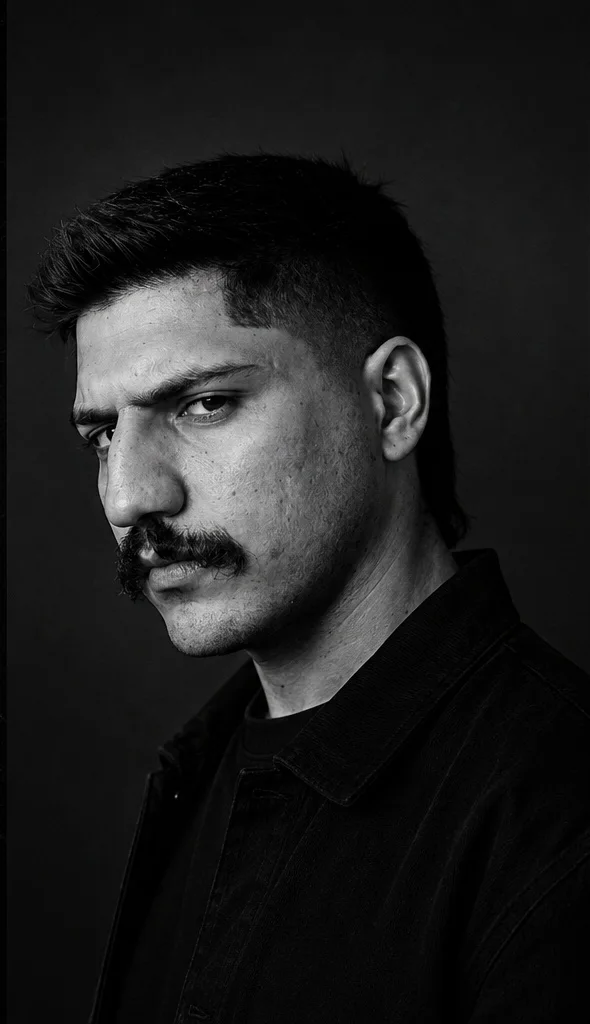
Para AESHROUSH, una batería no tiene por qué ser el centro de una pieza de música electrónica.
Puede sostenerla, modificar su tensión o empujarla hacia adelante, pero su función pertenece a algo mayor.
“Me interesa mucho más crear una atmósfera y contar una historia a través del sonido que simplemente depender de baterías potentes o agresivas”, explica Soroush. “Para mí, la batería forma parte de la narrativa, en lugar de ser el centro absoluto de la música”.
La idea ayuda a entender un proyecto que no comenzó en un club ni frente a un software de producción.
Soroush nació en Irán en 1998 y empezó a trabajar con música tradicional y regional iraní cuando tenía nueve años. Paralelamente fue desarrollando interés por la electrónica, hasta que a los 17 comenzó a producir bajo un nombre artístico diferente.
Desde entonces ha intentado acercar ambos universos sin convertir la tradición iraní en un recurso superficial.
“Siempre he intentado combinar la oscuridad y la profundidad que encontré en los sonidos tradicionales y regionales iraníes con distintas formas de música electrónica, pero de una manera indirecta y alejada de los clichés”.
AESHROUSH nace precisamente de esa búsqueda.
Encontrar un espacio que todavía no existía
Soroush no recuerda un instante exacto en que haya descubierto la música electrónica.
Recuerda otra cosa: una sensación que buscaba y no encontraba.
“Siempre estaba buscando cierta atmósfera y un espacio emocional que no lograba encontrar en otros tipos de música. Finalmente decidí que, en lugar de buscar esa sensación en la música de otra persona, quería crear ese espacio para mí mismo”.
Esa necesidad parece más importante para comprender AESHROUSH que cualquier genealogía estrictamente ligada a un género.
Incluso una de las experiencias que más transformó su manera de producir llegó desde fuera de la electrónica. Hace algunos años escuchó por primera vez una pieza experimental de atmospheric ambient metal. El descubrimiento, cuenta, modificó profundamente su relación con los arreglos, el sonido y hasta con la interpretación de instrumentos.
Es una influencia que ayuda a explicar por qué habla de profundidad, familiaridad y narrativa antes que de potencia.
Parte de sus atmósferas surgen además de sonidos encontrados naturalmente en la vida cotidiana. No busca necesariamente reproducirlos de manera reconocible: le interesa construir alrededor de ellos una sensación familiar, incorporándolos a espacios sonoros que funcionan más como relatos que como demostraciones de fuerza.
La misma lógica de oscuridad aparece en el nombre del proyecto.
AESHROUSH combina Soroush con Aeshma, figura de la antigua tradición iraní asociada a la ira y la violencia. La referencia encuentra correspondencia en la tradición avéstica: Aēšma representa la ira y aparece vinculado a comportamientos violentos y destructivos. (Iranica Online)
En la música de Soroush, sin embargo, esa oscuridad no funciona simplemente como una estética agresiva.
Cuando se le pregunta qué espera provocar en quien lo escucha, enumera cuatro sensaciones:
“Confusión, rabia, emoción y una sensación de estar completamente inmersos en el momento”.
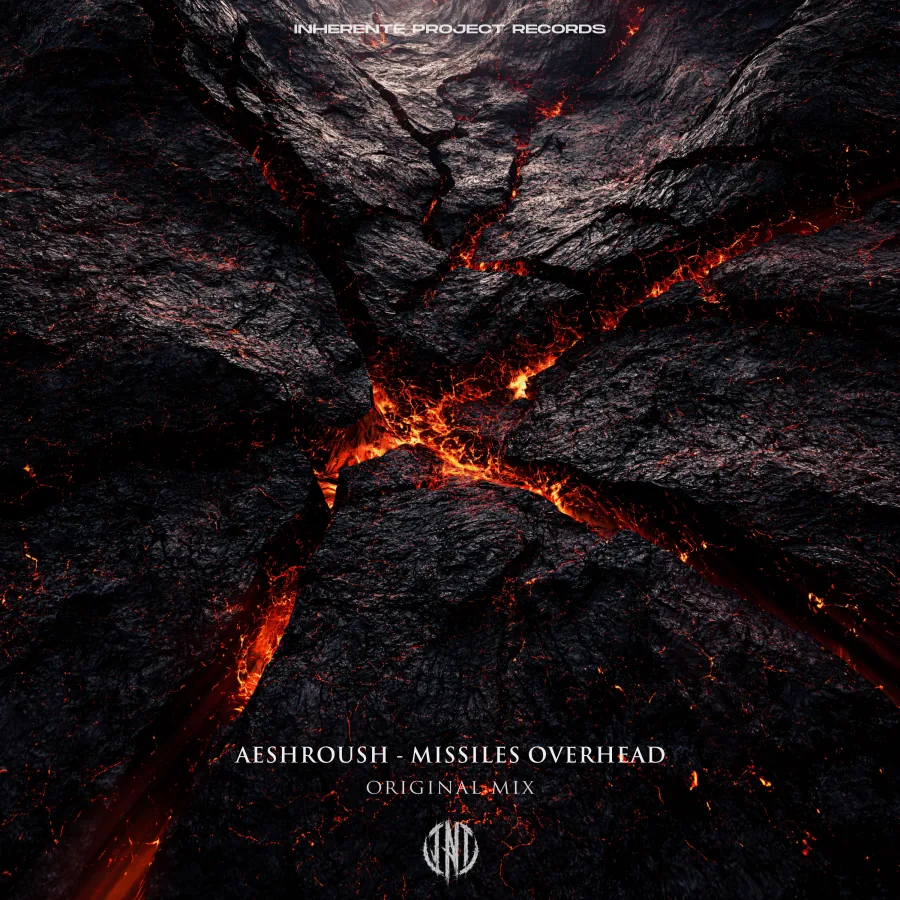
Próximamente · EP · ITR052
Missiles Overhead
AESHROUSH
- 01Constant FlowMezcla original
- 02Impact ChamberyMezcla original
Crear antes de explicar
Esa relación con lo emocional también atraviesa el nuevo EP que publicará a través de Inherente Project Records.
Preguntarle por el concepto detrás de sus dos tracks produce una respuesta menos programática de lo habitual.
No hay un manifiesto previo. Tampoco una historia construida antes de comenzar a producir.
“Desafortunadamente, o quizás afortunadamente, normalmente no puedo describir una intención específica detrás de la creación de un track”, reconoce.
Para Soroush, la producción suele aparecer como una descarga antes que como la ejecución de una idea previamente definida.
“La mayoría de mis producciones son el resultado de una liberación emocional y psicológica más que de un concepto definido conscientemente. No siempre comienzo un track con un mensaje particular que quiero comunicar. Normalmente lo creo como una forma de expresar aquello que está ocurriendo dentro de mí en ese momento”.
Eso no significa ausencia de identidad.
La identidad aparece precisamente en aquello que se repite sin necesidad de ser planificado: su búsqueda de profundidad, la oscuridad, los recuerdos sonoros, la relación con la tradición y una necesidad constante de construir atmósferas.
En ese espacio pueden convivir elementos de procedencias muy distintas —música regional iraní, electrónica, ambient, metal experimental, sonidos cotidianos— sin necesidad de anunciar explícitamente de dónde viene cada uno.
Una escena que existe, aunque no siempre podamos verla
Hablar con un productor iraní también abre una ventana hacia una parte de la cultura electrónica que rara vez ocupa el centro de la conversación internacional.
Soroush asegura haber participado durante años en distintos sectores de la escena electrónica de su país, principalmente dentro del underground y muchas veces desde el anonimato.
“He actuado como DJ en lugares donde nunca quise ser visto ni asociado públicamente con ese entorno”. Decide no entregar detalles sobre esos espacios.
Y no es necesario conocerlos para comprender algo fundamental: la ausencia de clubes reconocibles, calendarios públicos o festivales visibles internacionalmente no significa que una escena no exista.
Cuando le preguntamos si realmente hay una comunidad de DJs y productores a su alrededor, la respuesta es inmediata:
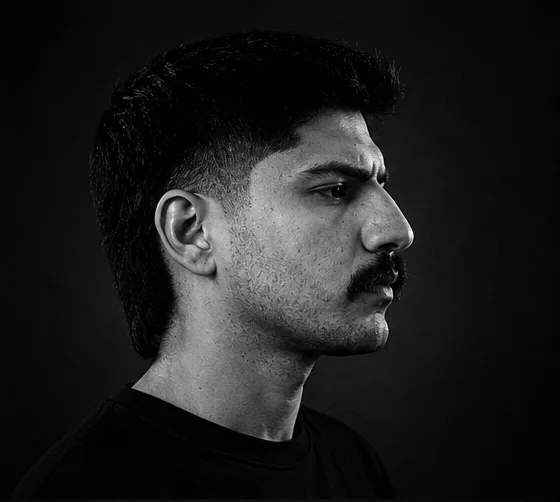
“Absolutamente. Hay muchos DJs y productores a mi alrededor y también en todo Irán, y existen personas genuinamente talentosas dentro de la escena”.
También existen encuentros.
Sin mencionar nombres ni ubicaciones, habla de eventos donde el techno ocupa un lugar importante. Muchos funcionan como fiestas de fin de semana, aunque ocasionalmente, explica, algunos alcanzan un nivel que considera respetable tanto en producción como en selección musical.
Su descripción también permite conocer qué está circulando actualmente dentro de esos espacios.
Según Soroush, Melodic Techno y Hardgroove se encuentran entre los estilos con mayor presencia, mientras que durante el último tiempo ha percibido un interés creciente por Industrial Techno y Hard Techno.
El Psytrance, agrega, ocupa un lugar particularmente relevante dentro de la electrónica iraní.
Es la fotografía de alguien que pertenece a esa comunidad, no un mapa definitivo de toda la escena de un país.
Pero cuestiona una idea bastante instalada sobre cómo imaginamos la cultura electrónica.
Las escenas no existen únicamente allí donde pueden documentarse fácilmente desde afuera.
También pueden desarrollarse mediante redes privadas, encuentros pequeños, productores trabajando desde sus casas, comunidades difíciles de observar internacionalmente y personas que deben administrar con mayor cuidado cuánto muestran de su actividad.
Las condiciones alrededor de la música
Es aquí donde la distancia entre distintas realidades deja de ser solamente cultural o musical.
Cuando le preguntamos cuáles son los principales desafíos de desarrollar un proyecto de música electrónica viviendo en Irán, Soroush responde sin rodeos:
“Prisión, fuertes multas económicas e incluso castigos corporales como la flagelación”.
La frase necesita contexto.
No significa que producir un track de música electrónica conduzca automáticamente a esas consecuencias. El propio Soroush explica que producir y publicar música normalmente no representa por sí solo el escenario de mayor riesgo.
Según su experiencia, las posibles consecuencias dependen de las circunstancias y pueden agravarse cuando la música, una actuación o el contexto que la rodea son percibidos como contrarios a los intereses, valores o ideología de las autoridades.
Las presentaciones públicas de electrónica, señala, se encuentran generalmente restringidas, aunque existen excepciones en determinados cafés, restaurantes y espacios similares.
Los castigos corporales que menciona tampoco pertenecen únicamente al terreno abstracto. Organizaciones internacionales continúan documentando el uso de la flagelación como pena en Irán. Amnistía Internacional reportó en marzo de 2025 que un cantante fue sometido a 74 latigazos por interpretar una canción de protesta contra las leyes de uso obligatorio del velo; la organización también ha documentado persecución contra cantantes, periodistas y otros artistas vinculados a distintas formas de expresión. (Amnesty International)
Esto no permite afirmar que “hacer techno en Irán se castiga con flagelación”. Sería una generalización que las fuentes no sostienen.
Sí permite entender por qué para algunos artistas iraníes las decisiones alrededor de tocar, exponerse públicamente o vincular su identidad a ciertos espacios pueden tener implicancias muy distintas a las que enfrenta un productor en otros lugares.
Para Soroush, esa precaución ha significado actuar sin querer ser reconocido públicamente como parte de determinados entornos.
A esto se suman obstáculos mucho menos dramáticos, pero constantes.
Habla de dificultades para abrir y mantener cuentas en plataformas digitales, recibir ingresos internacionales y acceder a equipamiento musical, que describe como caro y en ocasiones difícil de encontrar.
Algunas plataformas globales sencillamente no operan de la misma forma en todos los territorios. Spotify, por ejemplo, continúa sin incluir a Irán entre los países desde los que permite oficialmente registrar una cuenta. (Spotify)
Para un productor independiente, estas diferencias pueden afectar algo tan básico como publicar, cobrar, adquirir herramientas o participar de una industria musical organizada cada vez más alrededor de servicios globales.
No impiden que la música exista. Cambian las condiciones bajo las cuales debe existir.
“La sangre no es interesante”
Las últimas preguntas de nuestra conversación relacionadas con la situación país de Irán fueron planteadas de manera opcional.
Soroush podía decidir no responder cualquier cosa que considerara sensible para él o para quienes lo rodean.
Cuando le preguntamos si el conflicto había modificado su manera de crear música, decidió detenerse.
“No puedo explicarlo. La sangre no es interesante”.
Cuando la pregunta cambia y se concentra en el lugar que ocupa la música dentro de su vida, la respuesta es distinta.
“La música lo es todo para mí: el duelo por la vida que nunca viví, por las personas cercanas a mí que fueron asesinadas y, finalmente, un refugio para mis noches”.
La conversación muestra aquí una dimensión diferente del mismo proyecto que antes describía a través de atmósferas, profundidad y liberación emocional.
Las emociones que atraviesan AESHROUSH no existen únicamente como conceptos estéticos. Hay experiencias detrás de ellas.
Pero incluso enfrentado a preguntas sobre su país, Soroush evita ocupar el lugar de alguien que pide compasión.
Cuando le preguntamos qué le gustaría que quienes observamos la situación desde otros lugares entendiéramos sobre las personas y artistas que viven en Irán, responde:
“No tenemos hambre de comida. Estamos luchando contra la falta de respeto, el derramamiento de sangre y la ausencia de personas cercanas a nosotros que fueron obligadas a marcharse a otros países. No necesitamos lástima ni expresiones de pesar de la Unión Europea, Estados Unidos u otros países que dicen solidarizarse con nosotros”.
Es probablemente uno de los momentos más importantes de la conversación, precisamente porque establece cómo no quiere ser observado.
Conocer las condiciones desde las que alguien produce no significa reducir su trabajo a esas condiciones.
Entenderlas tampoco requiere transformar al artista en representante de un país completo.
Irán forma parte de la historia de AESHROUSH: está en su formación musical, en los sonidos que reconoce desde la infancia, en el nombre del proyecto, en la comunidad electrónica de la que ha formado parte y también en algunos de los obstáculos que encuentra alrededor de ella.
Pero AESHROUSH no es una explicación de Irán. Es un proyecto musical.
De Irán hacia afuera
Hay algo particular en que esta música recorra ahora miles de kilómetros para terminar siendo publicada desde Chile.
Para Soroush, que alguien pueda escucharla desde otros países es simplemente “interesante e importante”.
Sobre publicar a través de un sello chileno, tampoco construye una gran narrativa:
“Me parece interesante y estoy feliz de formar parte de él”.
Su relación con el futuro mantiene la misma sencillez.
No menciona un gran sello al que aspire necesariamente a llegar ni una colaboración utilizada como símbolo de éxito. Está abierto, dice, a trabajar con cualquier persona cuyo lenguaje pueda convivir con su dirección artística y donde la colaboración resulte beneficiosa para ambos.
Hay, sin embargo, una experiencia que sí quiere vivir:
presentarse en grandes eventos underground alrededor del mundo.
El deseo parece especialmente significativo considerando que parte de su recorrido como DJ ha ocurrido en espacios donde prefería no ser identificado.
También completa un recorrido que comenzó muchos años antes de AESHROUSH.
Primero estuvo la música tradicional y regional iraní.
Después apareció una búsqueda difícil de definir: aquella atmósfera que Soroush trataba de encontrar en otros sonidos y que nunca terminaba de aparecer.
Entonces decidió construirla por sí mismo.
Hoy AESHROUSH sigue funcionando como ese espacio: un punto de encuentro entre sonidos heredados y encontrados, entre oscuridad y memoria, entre electrónica y experiencias que no necesariamente necesitan explicarse antes de convertirse en música.
Al final de nuestra conversación, Soroush deja una última idea para quienes se acerquen por primera vez a su trabajo:
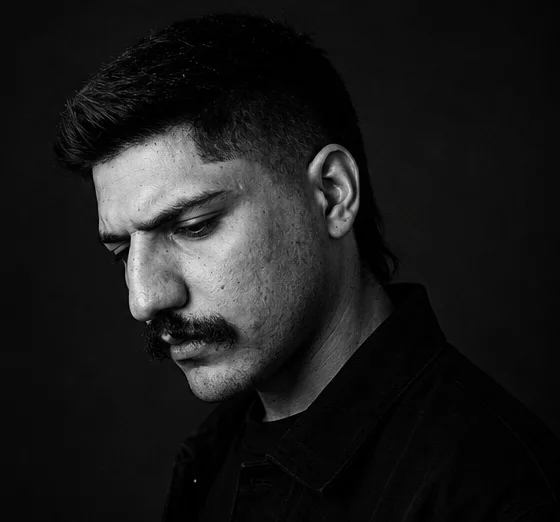
“Me gustaría decirles a todos que mantengan una mente abierta al explorar sus propias mentes y experiencias, y que eviten la autoglorificación y la confianza fuera de lugar”.
Quizás sea también una manera de entender su música. No como una respuesta cerrada. Como un lugar donde entrar.
For AESHROUSH, drums do not have to sit at the center of an electronic track.
They can support it, alter its tension or push it forward, but their function belongs to something larger.
“I’m much more interested in creating an atmosphere and telling a story through sound than simply relying on powerful or aggressive drums,” Soroush explains. “For me, the drums are part of the narrative rather than the absolute center of the music.”
That idea helps explain a project that did not begin in a club or in front of music production software.
Soroush was born in Iran in 1998 and began working with traditional and regional Iranian music when he was nine years old. At the same time, he developed an interest in electronic music, eventually beginning to produce under a different artist name at the age of 17.
Since then, he has tried to bring those two worlds together without turning Iranian tradition into a superficial reference.
“I’ve always tried to combine the darkness and depth I found in traditional and regional Iranian sounds with different forms of electronic music, but in an indirect way that stays away from clichés.”
AESHROUSH grew precisely from that search.
Finding a space that did not yet exist
Soroush does not remember the exact moment he discovered electronic music.
What he does remember is searching for a feeling he could not find.
“I was always looking for a certain atmosphere and an emotional space that I couldn’t find in other kinds of music. Eventually, instead of continuing to search for that feeling in someone else’s music, I decided I wanted to create that space for myself.”
That need seems more important to understanding AESHROUSH than any strict genre lineage.
One of the experiences that most transformed his approach to production even came from outside electronic music. Some years ago, he heard an experimental atmospheric ambient metal track for the first time. The discovery, he says, deeply changed the way he approached arrangements, sound and even instrumental performance.
It helps explain why he speaks about depth, familiarity and narrative before power.
Some of his atmospheres also emerge from sounds encountered naturally in everyday life. He does not necessarily try to reproduce them in a recognizable form. Instead, he is interested in building a sense of familiarity around them, placing them inside sonic spaces that function more like stories than demonstrations of force.
The same relationship with darkness appears in the name of the project.
AESHROUSH combines Soroush with Aeshma, a figure from ancient Iranian tradition associated with anger and violence. The reference also appears in the Avestan tradition, where Aēšma is connected with wrath and destructive behavior. (Iranica Online)
In Soroush’s music, however, darkness does not function simply as an aggressive aesthetic.
When asked what he hopes listeners will feel when they hear his music, he names four sensations:
“Confusion, anger, emotion and a sense of being completely immersed in the moment.”
Coming soon · EP · ITR052
Missiles Overhead
AESHROUSH
- 01Constant FlowOriginal Mix
- 02Impact ChamberyOriginal Mix
Creating before explaining
That emotional relationship also runs through the new EP he will release through Inherente Project Records.
Asking him about the concept behind the two tracks produces a less programmatic answer than usual.
There is no manifesto behind them. Nor is there necessarily a story constructed before the production process begins.
“Unfortunately, or maybe fortunately, I usually can’t describe a specific intention behind creating a track,” he says.
For Soroush, production tends to emerge as a form of release rather than the execution of a previously defined idea.
“Most of my productions are the result of an emotional and psychological release rather than a consciously defined concept. I don’t always start a track with a particular message I want to communicate. Usually, I create it as a way of expressing whatever is happening inside me at that moment.”
That does not mean there is no identity.
The identity appears precisely in what keeps returning without needing to be planned: his search for depth, darkness, sonic memories, his relationship with tradition and a constant need to build atmosphere.
Within that space, elements from very different places can coexist — regional Iranian music, electronic music, ambient, experimental metal and everyday sounds — without having to openly announce where each one comes from.
A scene that exists even when we cannot always see it
Speaking with an Iranian producer also opens a window onto a part of electronic culture that rarely sits at the center of the international conversation.
Soroush says he has spent years active in different parts of Iran’s electronic music scene, mostly within the underground and often anonymously.
“I’ve performed as a DJ in places where I never wanted to be seen or publicly associated with that environment.”
He chooses not to provide details about those spaces.
And we do not need to know them in order to understand something fundamental: the absence of recognizable clubs, public event calendars or internationally visible festivals does not mean a scene does not exist.
When we ask whether there is genuinely a community of DJs and producers around him, the answer is immediate:
“Absolutely. There are many DJs and producers around me and throughout Iran, and there are genuinely talented people within the scene.”
There are also gatherings.
Without mentioning names or locations, he talks about events where techno plays an important role. Many function essentially as weekend parties, although occasionally, he says, some reach a level he considers respectable in both production and musical quality.
His description also offers a glimpse into what is currently circulating in those spaces.
According to Soroush, melodic techno and hardgroove are among the styles with a stronger presence, while he has recently noticed growing interest in industrial techno and hard techno.
Psytrance, he adds, also holds a particularly important position within Iranian electronic music.
It is the perspective of someone who belongs to that community, not a definitive map of an entire country’s scene.
But it challenges a fairly common idea about how we imagine electronic culture.
Scenes do not only exist where they can easily be documented from the outside.
They can also develop through private networks, small gatherings, producers working from home, communities that remain difficult to observe internationally and people who need to be much more careful about how much of their activity they reveal.
The conditions surrounding the music
This is where the distance between different realities stops being purely cultural or musical.
When we ask Soroush about the main challenges of developing an electronic music project while living in Iran, his answer is direct:
“Prison, heavy financial fines and even corporal punishment such as flogging.”
The statement requires context.
It does not mean that producing an electronic music track automatically leads to those consequences. Soroush himself explains that producing and releasing music does not usually represent the highest-risk scenario in itself.
In his experience, the possible consequences depend on the circumstances and can become more serious when music, a performance or its surrounding context is perceived as being contrary to the interests, values or ideology of the authorities.
Public electronic music performances, he says, are generally restricted, although there are some exceptions in certain cafés, restaurants and similar spaces.
The corporal punishment he mentions is not simply hypothetical. International organizations continue to document the use of flogging as a punishment in Iran. In March 2025, Amnesty International reported that a singer had been subjected to 74 lashes for performing a protest song against compulsory veiling laws; the organization has also documented persecution involving singers, journalists and other artists in connection with different forms of expression. (Amnesty International)
That does not allow us to claim that “making techno in Iran is punishable by flogging.” The available sources do not support such a generalization.
What it does help explain is why, for some Iranian artists, decisions about performing, exposing themselves publicly or associating their identity with certain spaces can carry very different implications from those faced by a producer elsewhere.
For Soroush, that caution has meant performing without wanting to be publicly recognized as part of certain environments.
There are also less dramatic but constant obstacles.
He talks about difficulties opening and maintaining accounts on digital platforms, receiving international income and accessing music equipment, which he describes as expensive and, in some cases, difficult to find.
Some global platforms simply do not operate in the same way across every territory. Spotify, for example, still does not list Iran among the countries from which users can officially register an account. (Spotify)
For an independent producer, those differences can affect something as basic as releasing music, getting paid, acquiring tools or participating in an industry increasingly organized around global services.
They do not stop the music from existing. They change the conditions under which it has to exist.
“Blood is not interesting”
The final questions in our conversation relating to the situation in Iran were presented as optional.
Soroush could choose not to answer anything he considered sensitive for himself or for those around him.
When we asked whether the conflict had changed the way he creates music, he chose to stop there.
“I can’t explain it. Blood is not interesting.”
When the question shifts toward the role music occupies in his life, the answer is different.
“Music is everything to me: mourning the life I never lived, the people close to me who were killed and, finally, a refuge for my nights.”
At this point, the conversation reveals another dimension of the same project he had previously described through atmosphere, depth and emotional release.
The emotions that run through AESHROUSH do not exist only as aesthetic concepts. There are lived experiences behind them.
But even when confronted with questions about his country, Soroush refuses to occupy the role of someone asking for compassion.
When we ask what he would like people observing the situation from other countries to understand about those living and creating in Iran, he answers:
“We are not hungry for food. We are fighting against disrespect, bloodshed and the absence of people close to us who were forced to leave for other countries. We don’t need pity or expressions of sorrow from the European Union, the United States or other countries that claim to stand in solidarity with us.”
It is probably one of the most important moments in the conversation, precisely because it establishes how he does not want to be seen.
Understanding the conditions from which someone creates does not mean reducing their work to those conditions.
Nor does understanding them require turning the artist into a representative of an entire country.
Iran is part of AESHROUSH’s story: it is present in his musical education, in the sounds he has known since childhood, in the name of the project, in the electronic community he has been part of and also in some of the obstacles he encounters while developing his work.
But AESHROUSH is not an explanation of Iran. It is a musical project.
From Iran outward
There is something particular about this music now travelling thousands of kilometers to be released from Chile.
For Soroush, the possibility of people hearing it in other countries is simply “interesting and important.”
Asked about releasing through a Chilean label, he does not build a grand narrative around it either:
“I find it interesting and I’m happy to be part of it.”
His relationship with the future carries the same simplicity.
He does not mention a major label he is determined to reach, nor a specific collaboration that would function as a symbol of success. He is open, he says, to working with anyone whose artistic direction fits with his own and where the collaboration can be beneficial to both sides.
There is, however, one experience he does want to have:
performing at major underground events around the world.
The desire feels especially significant considering that part of his journey as a DJ has taken place in spaces where he preferred not to be identified.
It also completes a path that began many years before AESHROUSH.
First came traditional and regional Iranian music.
Then came a search that was difficult to define: the atmosphere Soroush kept trying to find in other sounds but could never quite reach.
So he decided to build it himself.
Today, AESHROUSH still functions as that space: a meeting point between inherited and discovered sounds, between darkness and memory, between electronic music and experiences that do not necessarily need to be explained before becoming music.
At the end of our conversation, Soroush leaves one final thought for those discovering his work for the first time:
“I would tell everyone to keep an open mind while exploring their own minds and experiences, and to avoid self-glorification and misplaced confidence.”
Perhaps that is also one way of understanding his music. Not as a closed answer. As a place to enter.